
Ask about a word · AI tutor · Free to start
Stuck on a word? Ask it a question.
A translation tells you what a word means. It does not tell you why it takes no article here, when natives use it, or how to stop mixing it up with its neighbour. Ask — on the card, while you study.
Try it on a word that will not stick
Three memory hooks, and you pick one
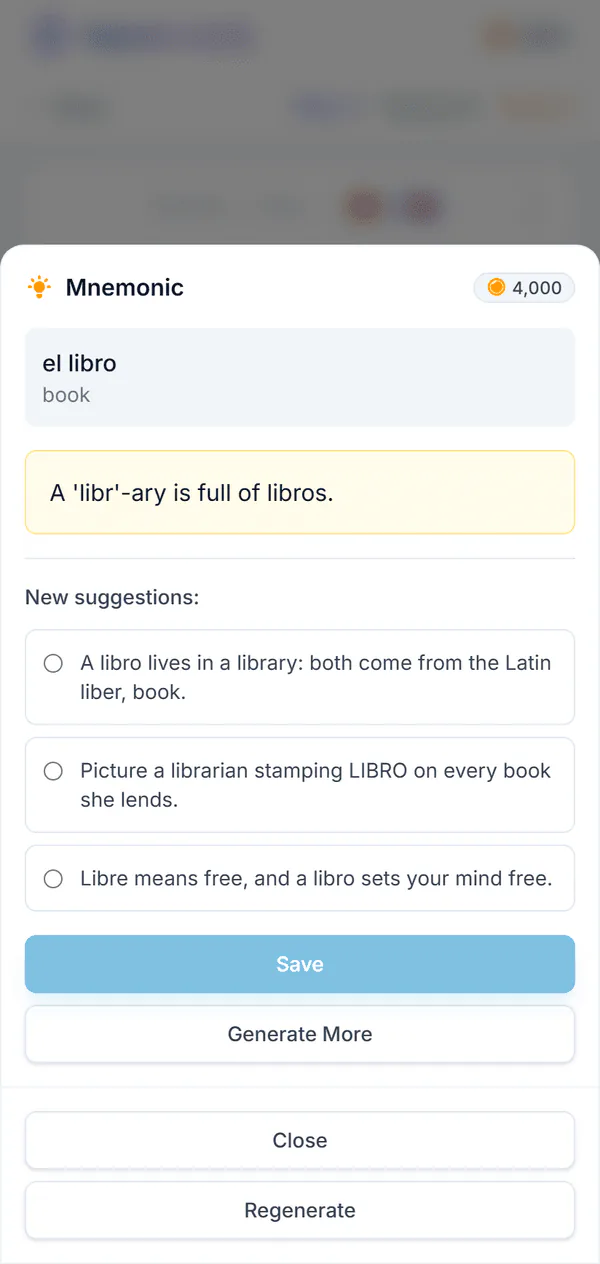
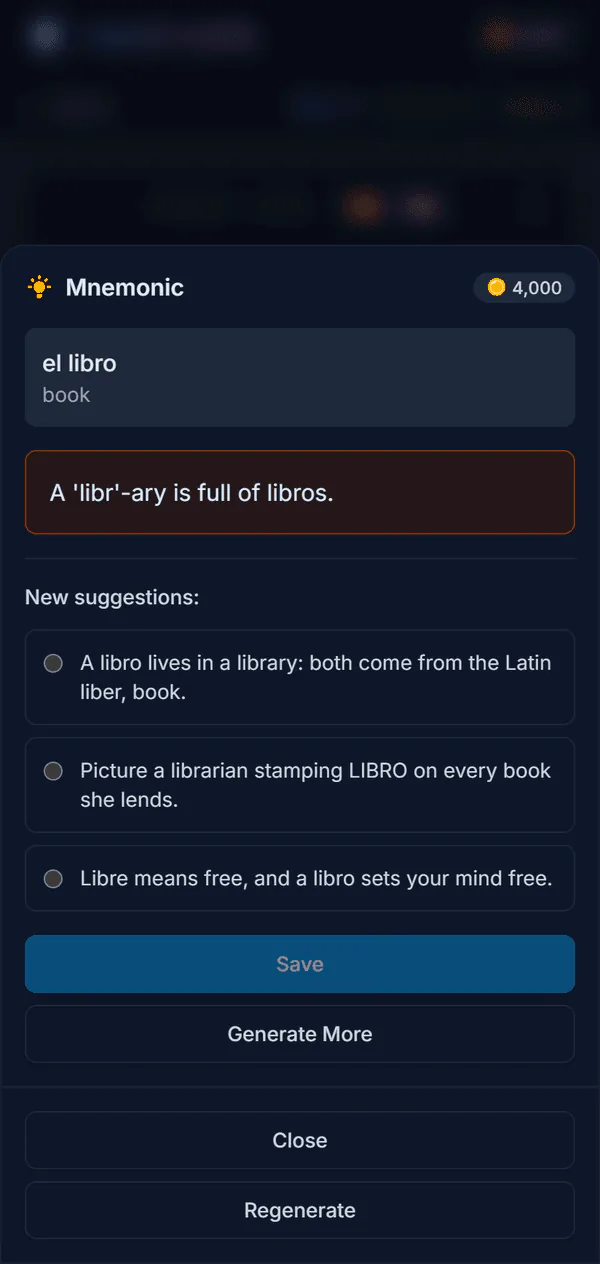
Some words refuse to stay. A mnemonic gives them something to hang on, but a single suggestion is a coin toss: the hook that works for one person means nothing to the next. So repeat.cards offers three, each built a different way:
- Roots. A cognate or a related word you already know, with the connection explained.
- Sound. Something in your own language that sounds like the word, tied to its meaning.
- A picture story. A short, vivid scene that links how the word sounds to what it means.
They are written in the language you learn from. Keep the one that clicks and it is saved to the card, one tap away in the deck list and during training. None of them works? Ask for three new ones.
A chat that knows the card
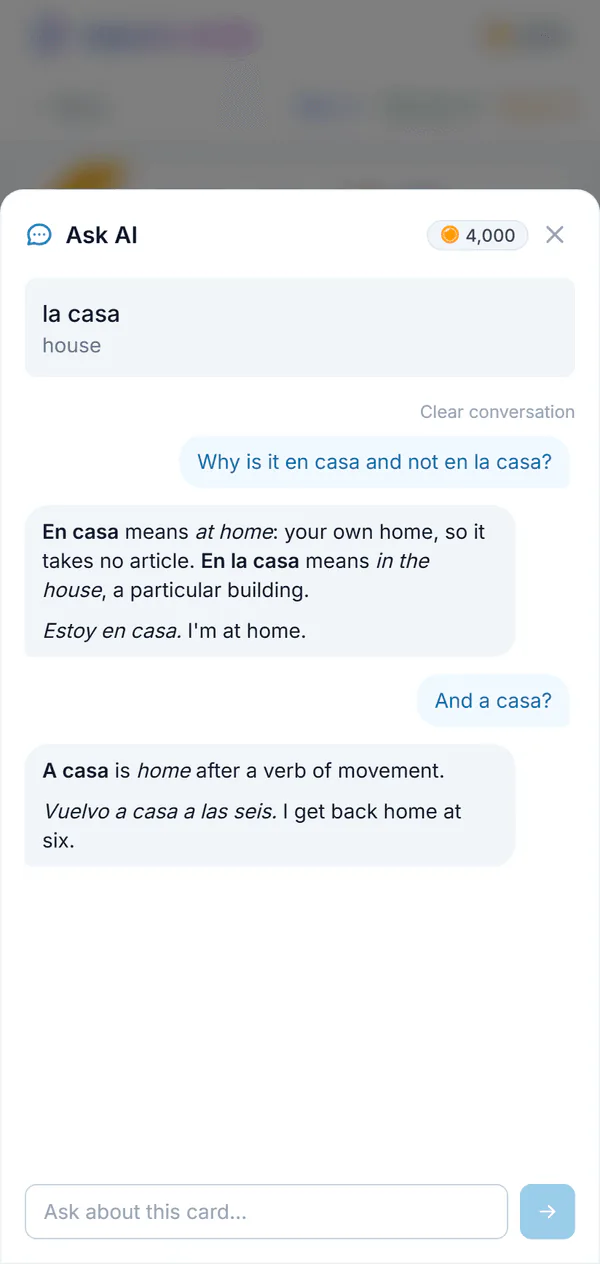
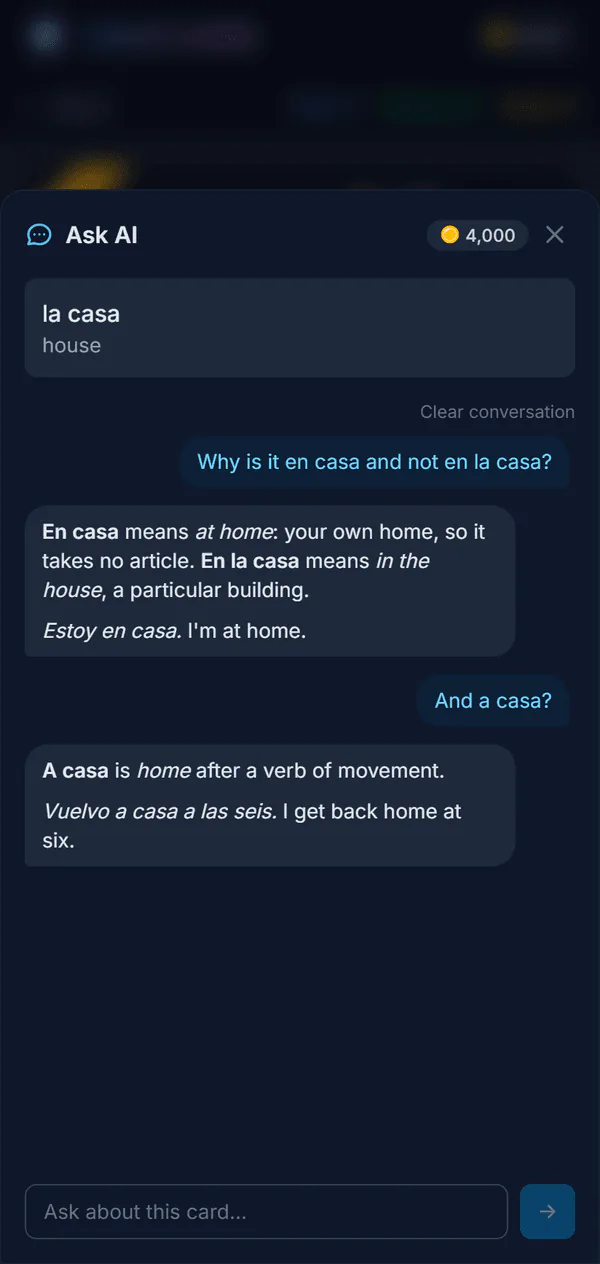
Every card has its own conversation. The chat already knows what is on the card — the word, the translation, the deck, the example sentence, the plural, the verb forms, the mnemonic and your own fields — so you ask the question and skip the explaining. It answers in the language you asked in, keeps answers short, and gives example sentences with a translation when they help.
Grammar
- For example
- Why is it en casa and not en la casa?
When to use it
- For example
- When would I say a casa instead?
Near neighbours
- For example
- How is esperar different from aguardar?
Register
- For example
- Would I say this to my boss, or only to friends?
Common mistakes
- For example
- What do learners usually get wrong with this verb?
Checking the card
- For example
- Is the plural on this card right?
You can open the chat from a card in the deck list, in the middle of a training session, or in the card editor before the card is even saved — in which case the conversation moves to the card when you save it. It is told to say when it is not sure rather than make something up, and to tell you when the card’s own data looks wrong.
Why ask on the card and not in a separate chatbot?
Because the answer stays where you will need it. A question asked in another app is gone by the next review; here it is saved with the word, so the next time the card comes up the explanation is one tap away. And because the chat sees the card, it answers about this word in this deck, not a general version of it.
Mnemonics and chat answers use AI and run on coins, like the rest of the AI features. Every account starts with some for free. Prices are on the pricing page.
Asking about a word FAQ
Which language does the chat answer in?
Is the conversation saved?
Can I ask about a word before I save the card?
What are the three mnemonics based on?
Does asking cost anything?
Can the AI be wrong?
Every word comes with its own tutor.
Make a deck, add the words you are learning, and ask about any of them. Free to start, no credit card, no API key.
Get started — freeThree mnemonics to choose from · A chat on every card · Saved with the card
Keep reading
AI flashcards
Type a word and AI fills in the rest of the card: example, audio, mnemonic, picture, grammar.
Grammar flashcards
Articles, plurals and verb conjugations on every card, preset for seven languages and checked in training.
Typed answers
Type the word instead of picking it; a letter-by-letter diff shows exactly what was off.
Pricing
What coins are, what packs cost, and what stays free.